Blue Ribbon Roofing Service Areas in Kansas City: Expert Roofing Solutions Near You
Blue Ribbon Roofing Service Areas in Kansas City: Expert Roofing Solutions Near You opens with a clear promise: practical, neighborhood-aware roofing guidance and what homeowners and businesses in the Kansas City metropolitan area need to know before scheduling repairs or replacements. This guide explains where service is available, which roofing systems suit local weather, how storm claims work, and how to prepare for inspections or emergency tarping. Many property owners face sudden hail or wind damage, uncertain material choices, and confusing insurance steps; this article addresses those pain points with actionable steps, checklists, and comparisons tailored to Kansas City roofing needs. You will find a service-area breakdown, a full list of residential and commercial services, an easy-to-read materials comparison, a step-by-step insurance-claims workflow, and clear instructions for booking inspections and emergency support. The next section lists specific Kansas City neighborhoods and suburbs so you can quickly confirm coverage and learn how local weather affects roofing priorities.
Which Kansas City Areas Does Blue Ribbon Roofing Serve?
This section defines the geographic footprint relevant to Kansas City roofing decisions and explains how service coverage and response times affect emergency mitigation and long-term projects. Understanding which suburbs and neighborhoods are reachable within short response windows matters for storm response, permitting, and scheduling roof replacements. The following neighborhood and suburb breakdown shows typical housing types and roofing age trends that influence repair versus replacement choices. Awareness of service radius helps homeowners anticipate travel windows for crews and plan temporary protections after storms. Next, we list neighborhoods and suburbs commonly served within the Kansas City metropolitan area and note any service considerations for outlying locations.
What Neighborhoods and Suburbs Are Included in Our Service Area?
Many neighborhoods and suburbs across the Kansas City metro share similar roofing needs but differ in home styles, roof age, and access for crews. The core suburban communities frequently served include Overland Park, Lee’s Summit, Lenexa, Shawnee, Leawood, Independence, Gladstone, Grandview, and Olathe, each with a mix of mid-century and newer construction that often uses asphalt shingles or metal panels. Older neighborhoods may show more wood shake or layered shingles and therefore require closer inspection for hidden decking issues. For distant suburbs, service times can be longer and scheduling windows may shift to accommodate travel, so early booking is beneficial. Understanding neighborhood construction helps prioritize materials and permitting for local jobs.
- Overland Park: A mix of modern and traditional homes that commonly use asphalt shingles and newer metal accents.
- Lee’s Summit: Residential neighborhoods with aging roofs that often need inspection for storm-related wear.
- Lenexa and Shawnee: Rapidly developing areas where new installations and warranty registrations are common.
- Leawood and Independence: Areas with varied architectural styles that sometimes require custom flashing and detailing.
These neighborhood patterns set the stage for how weather affects roofing across the metro, which we cover next.
How Do Local Weather Patterns Affect Roofing Needs in Each Area?
Kansas City’s climate—characterized by frequent thunderstorms, hail events, high winds, and wide temperature swings—directly shapes roofing material performance and inspection cadence. Hail and wind are primary causes of asphalt shingle bruising and lift, while rapid freeze-thaw cycles stress flashings and chimney seals; coastal-style materials are less relevant here than impact-resistant options. Microclimates exist across the metro: open suburban lots face stronger wind exposure, while denser urban neighborhoods can trap heat and accelerate shingle aging. These patterns inform recommended inspection frequency—annual checks after storm seasons and more thorough inspections after known hail paths—so homeowners can catch damage before it becomes structural. Recognizing how weather drives maintenance needs helps property owners choose resilient materials and schedule proactive inspections.
How Does Blue Ribbon Roofing Tailor Services for Kansas City Metro and Surrounding Cities?
Tailoring service for metro versus outlying areas means adjusting crew deployment, material staging, and permitting workflows to local conditions and codes. In denser parts of Kansas City, crews optimize staging and protective measures for neighboring properties, while in suburbs they account for HOA rules and driveway access when scheduling larger replacements. For storm response, prioritization is based on damage severity and local risk factors, with temporary tarping and rapid assessments used to protect interiors until full repairs can be completed. Blue Ribbon Roofing operates conceptually across the Kansas City metropolitan area, aligning response strategies and local code knowledge with customer expectations for timely assessments and durable outcomes. This operational adaptability reduces delays and improves restoration quality in every neighborhood.
What Residential and Commercial Roofing Services Are Offered in Kansas City?
This section defines the primary roofing services available across residential and commercial sectors and explains how each service delivers measurable benefits to property owners. Roofing services include repair, replacement, inspection, new installation, and rapid storm-response work; each has specific timelines, cost drivers, and warranty considerations that affect decision-making. Commercial systems require different membranes and drainage planning compared with steep-slope residential roofs, and storm restoration often demands both temporary mitigation and full-material replacement. After a brief overview, the section provides a concise service list with one-line unique value propositions and an EAV table that compares typical timelines, cost drivers, and warranty elements to support quick decisions.
Blue Ribbon Roofing provides local service across the Kansas City metro and can be engaged for repairs, replacements, inspections, and emergency storm work; response priorities and on-site deliverables are tailored to local needs. Next, we outline how repair and replacement projects progress on typical Kansas City properties.
How Does Blue Ribbon Roofing Handle Roof Repair and Replacement in KC?
Repair and replacement begin with a documented inspection identifying storm damage, wear, or structural concerns; this inspection informs whether localized repair or full replacement is recommended. The process typically includes a visual and drone-assisted assessment, a written estimate listing materials and labor drivers, and a timeline that reflects material lead times and permit cycles in the Kansas City metro. Decision criteria for repair versus replacement hinge on damage extent, roof age, and decking condition; isolated shingle failure usually warrants repair, while widespread granule loss and multiple leaks suggest replacement. Blue Ribbon Roofing’s conceptual workflow emphasizes clear documentation and coordinated scheduling to minimize downtime while protecting interiors during work.
- Inspection: Photographic and drone documentation to establish scope.
- Estimate: Itemized materials, labor, and timeline for repair or replacement.
- Execution: Staged work with protective measures to avoid secondary damage.
What Are the Benefits of Our Storm Damage Roof Repair Services?
Rapid, documented storm-response work reduces the chance of interior water damage, structural degradation, and secondary mold growth after Kansas City storms. Immediate measures—like temporary tarping and prioritized inspections—preserve interior conditions while claims and full repairs are processed. Thorough documentation produced during mitigation supports faster insurance review by providing photo evidence, measured damage reports, and clear scope-of-work estimates. For property owners, the main benefits are minimized interior damage, clearer claims outcomes, and the ability to resume normal occupancy sooner, with repairs scheduled to align with claim approvals. Clear mitigation and documentation also reduce disputes with adjusters by presenting consolidated evidence of loss.
- Rapid tarping and protection to prevent interior water entry.
- Detailed photo and measurement records for insurance documentation.
- Coordinated scheduling with claims timelines to reduce repair delays.
After emergency benefits come the typical inspection and installation workflow for new roofs.
How Do Roof Inspections and New Installations Work in Kansas City?
Inspections are delivered as a combination of on-roof visual checks and drone-enabled imaging that identify granule loss, flashing issues, and decking deterioration; inspectors provide a written report with photos, recommended actions, and a prioritized repair plan. New installations follow a standard workflow: scope confirmation, material selection informed by local weather and architecture, permit acquisition where required, installation with protective measures, and final inspection with cleanup and warranty documentation. Drone and AI-assisted inspection tools accelerate accurate measurement and deliver a clear visual record that benefits both homeowners and insurers. The inspection report and installation timeline are designed to give Kansas City property owners a predictable, documented path from estimate to final warranty handoff.
| Service | Attribute (typical timeline / cost drivers / warranty) | Value |
|---|---|---|
| Roof Repair | 1-3 days; damage extent, decking condition; workmanship warranty | Typical localized fixes, focused on affected areas with short timelines |
| Roof Replacement | 2-7 days; roof size, tear-off vs overlay, permit needs; manufacturer & workmanship warranty | Full-system replacement with new underlayment and shingle or metal materials |
| Roof Inspection | Same-day to 3 days; scope depth (visual/drone), report detail; report deliverable | Photo-rich report with prioritized recommendations for claims or maintenance |
| Storm Response | Same-day to 2 days; emergency tarping, material availability; temporary protection warranty | Rapid mitigation and documentation to prevent interior damage and support claims |
This table clarifies timelines and warranty expectations to help property owners compare service types and next steps.
Which Roofing Materials Does Blue Ribbon Roofing Use in Kansas City?
Material selection in Kansas City must balance impact resistance, wind uplift performance, lifecycle costs, and aesthetic fit with neighborhood architecture. Common options include asphalt shingles, metal panels, tile, wood shake, and low-slope membranes like TPO or EPDM for commercial roofs; each material responds differently to hail, wind, and temperature swings. The right material choice reduces long-term maintenance and better withstands Kansas City’s storm patterns. Below is a concise comparison of common materials for local homes and businesses, followed by brand and certification considerations relevant to performance and warranty support.
What Are the Advantages of Asphalt Shingles and Metal Roofing in KC?
Asphalt shingles remain the most common residential choice in Kansas City for their cost-effectiveness, ease of installation, and wide aesthetic range, offering reasonable impact resistance when upgraded to architectural or impact-rated variants. Metal roofing provides superior wind resistance, longer service life, and quicker shedding of snow and debris, making it attractive for homeowners prioritizing longevity and reduced maintenance. Asphalt is typically less expensive upfront and easier to repair, while metal’s higher initial cost can be offset by extended lifespan and energy-reflective options that reduce cooling loads. Neighborhoods with historic or classic suburban homes often favor shingles, whereas modern or performance-driven properties sometimes choose metal.
- Asphalt shingles: Affordable, widely available, good for typical KC residential roofs.
- Metal panels: Durable, wind-resistant, and longer-lived for owners seeking low maintenance.
- Decision factors: budget, desired lifespan, and local architectural fit.
How Do Tile, Wood Shake, and Flat Roofing Materials Perform in Kansas City Weather?
Tile roofing offers long life and distinct aesthetics but requires roof structures capable of supporting heavier loads and typically sees less use in typical Kansas City subdivisions. Wood shake provides natural appearance but demands more maintenance and is less resilient to hail and moisture cycles common in the region. Flat roofing systems such as TPO and EPDM are standard for commercial buildings and require regular maintenance to address ponding and flashing integrity; they perform well when properly installed and drained. Each material requires a maintenance plan tuned to local storms and seasonal temperature swings to preserve service life and protect warranties.
Which Certified Brands and Products Does Blue Ribbon Roofing Recommend?
When selecting materials, homeowners should consider manufacturer reputation and available product warranties; commonly referenced brands in the industry include GAF, Owens Corning, CertainTeed, and TAMKO, each offering product lines with differing impact and wind ratings suited to Kansas City conditions. Certification programs (for example, impact- or wind-rating endorsements) affect available manufacturer warranties and installer-required procedures for warranty eligibility. Choosing certified products with proper installation documentation helps ensure warranty support if storm damage occurs. For project planning, prioritize products with strong local supply and proven performance in Midwestern hail and wind patterns.
| Material | Attribute (durability / impact resistance / cost / maintenance) | Value (recommended neighborhoods) |
|---|---|---|
| Asphalt Shingles | Medium durability; medium impact resistance; $; low maintenance | Widely suitable across suburban neighborhoods |
| Metal Panels | High durability; high impact resistance; $$-$$$; low maintenance | Good for open lots and modern builds seeking longevity |
| Tile | High durability; medium impact resistance; $$$; medium maintenance | Suited for high-end homes with reinforced structure |
| Wood Shake | Medium durability; low impact resistance; $$$; high maintenance | Best for historic homes with regular upkeep |
| TPO/EPDM (flat) | Medium-high durability; variable impact resistance; $$; periodic maintenance | Commercial and low-slope residential applications |
This material EAV table helps homeowners match durability and cost trade-offs to neighborhood styles and climate considerations.
How Does Blue Ribbon Roofing Support Insurance Claims for Storm Damage in Kansas City?
A transparent, stepwise approach to insurance claims reduces delays and improves approval rates for storm-related repairs and replacements. The process begins with immediate documentation and inspection, proceeds through estimate submission and adjuster coordination, and concludes with repair scheduling after approvals. Clear evidence—photos, drone imagery, and a contractor report—forms the backbone of a successful claim. Blue Ribbon Roofing assists conceptually with documentation, inspections, and adjuster coordination to streamline the path from damage to repair; the company’s role is to provide accurate information and work with property owners to align repairs with insurer expectations. Below is a numbered checklist homeowners can follow after storm events.
- Document the scene with photos and video, capturing damaged shingles, gutters, and impacted exterior items.
- Secure temporary protections such as tarps to prevent interior water entry and document those actions.
- Schedule a full inspection to generate a contractor report and itemized repair estimate for insurer submission.
- File the claim with your insurer and provide the contractor report, photos, and any receipts for temporary mitigation.
- Coordinate an adjuster meeting, using the contractor’s documentation to support scope and replacement cost estimates.
What Is the Process for Filing Roofing Insurance Claims in KC?
Filing a claim starts with immediate documentation—photographs of visible damage, timestamps, and a record of temporary protections—and proceeds with a formal inspection that yields an itemized contractor report. Insurers typically require proof of loss, measurements, and cause-of-loss statements; presenting a clear contractor report with drone imagery expedites adjuster reviews and helps align scope expectations. Timelines vary but expect initial inspection and documentation within days and adjuster visits within the early phase of the claim, depending on storm volume. Homeowners who follow a systematic documentation process reduce ambiguity during the adjustment stage and improve the likelihood of a full repair or replacement settlement.
| Claim Stage | Attribute (required docs / typical timeline / blue ribbon role) | Value |
|---|---|---|
| Inspection | Photos, drone imagery, contractor report; 1-5 days; produce detailed report | Evidence-gathering to document scope and immediate protections |
| Estimate Submission | Itemized estimate and materials list; 1-7 days; submit to insurer | Clarifies cost drivers and material choices for adjuster review |
| Adjuster Coordination | Adjuster visit and review; 3-14 days; attend and provide documentation | Aligns contractor scope with insurer expectations to avoid scope gaps |
| Repair Authorization | Approval or supplement negotiation; timeline varies; schedule repairs | Coordinate scheduling and document final scope for repair execution |
This table maps each claim stage to documents and expected roles so homeowners know what to expect.
How Does Blue Ribbon Roofing Assist Homeowners and Business Owners with Claims?
Practical assistance includes producing a clear inspection report, submitting itemized estimates, coordinating adjuster meetings, and advising on documentation standards insurers expect for Kansas City claims. The contractor’s documentation often demonstrates cause of loss and scope, which can be decisive when adjusters consider hail or wind damage versus wear. Working with an experienced inspection process that includes drone imagery and precise measurements helps streamline discussions and can reduce the need for lengthy appeals. Blue Ribbon Roofing acts as a local resource to help property owners prepare robust claims packages, coordinate with adjusters, and schedule repairs to follow claim approvals.
Why Choose Blue Ribbon Roofing as Your Local Roofing Contractor in Kansas City?
Choosing a local contractor hinges on demonstrated local knowledge, familiarity with municipal codes and permitting, and the ability to respond quickly after storms. Local expertise shortens permit cycles, addresses HOA requirements appropriately, and helps crews apply regionally optimized flashing and underlayment details for Kansas City weather. While specific certifications for any one contractor are not listed here, homeowners should seek installers with recognized manufacturer certifications and local experience. Reviews and project outcomes that emphasize timeliness, documentation quality, and claims support are strong signals of reliable local performance. Below are factors homeowners should weigh when selecting a contractor in the Kansas City metro.
- Local code knowledge and permit handling to prevent project delays.
- Demonstrated storm-response capacity and documentation practices for claims.
- Clear inspection reports with photographic and drone evidence to support decisions.
These selection criteria naturally follow from the local service models discussed earlier and lead into specific certification considerations.
What Certifications and Affiliations Does Blue Ribbon Roofing Hold?
Specific certifications for Blue Ribbon Roofing are not enumerated here; however, homeowners should understand common certifications and affiliations that affect warranty and workmanship outcomes. Manufacturer certifications from recognized brands (such as GAF, Owens Corning, or CertainTeed) often qualify installers for extended warranties when installation protocols are followed. Industry affiliations—like membership in trade associations or local business bureaus—signal a commitment to standards and dispute-resolution practices. When evaluating contractors, request proof of manufacturer-certified installer status and verification of any claimed affiliations to ensure warranty eligibility and workmanship accountability.
How Does Our Local Expertise Benefit Kansas City Customers?
Local expertise translates into practical advantages: faster permitting, precise flashing details that match regional roof assemblies, and material choices that reflect Kansas City’s hail and wind exposure. Familiarity with municipal inspectors, HOA rules, and common neighborhood construction characteristics reduces surprises during installation and helps expedite warranty registrations. Locally tuned installation details—such as reinforced hip and ridge fastening patterns or ice-and-water shield placement in vulnerable roof valleys—address the particular stresses of Midwest storms. These concrete benefits offer homeowners a smoother project experience and more durable outcomes.
What Do Customer Reviews and Project Examples Say About Our Work?
While specific customer testimonials are not provided here, consistent themes that matter for Kansas City projects include timeliness, transparent documentation for claims, and thorough cleanup after installations. Project summaries that highlight successful storm restorations, coordinated adjuster meetings, and completed replacements within projected timelines demonstrate reliability and process competence. When reviewing case examples, look for evidence of clear photographic documentation, efficient scheduling around permit cycles, and outcomes that match the scope in the original estimate. These indicators provide insight into contractor performance across storm-response and planned replacement projects.
What Are Common Roofing Problems in Kansas City and How Does Blue Ribbon Roofing Address Them?
Common local roofing problems include hail and wind damage, leaks from failed flashings, aging-related granule loss, and ponding on low-slope systems; each requires a tailored remediation strategy. Early detection through annual inspections and post-storm assessments helps prevent hidden decking rot and interior damage. Remediation ranges from targeted flashing repairs and shingle replacement to full-system replacement when decking or structural issues are present. Emergency mitigation—such as tarping and quick assessment—reduces interior exposure while documentation for insurers is compiled. The following list highlights typical signs and immediate homeowner actions.
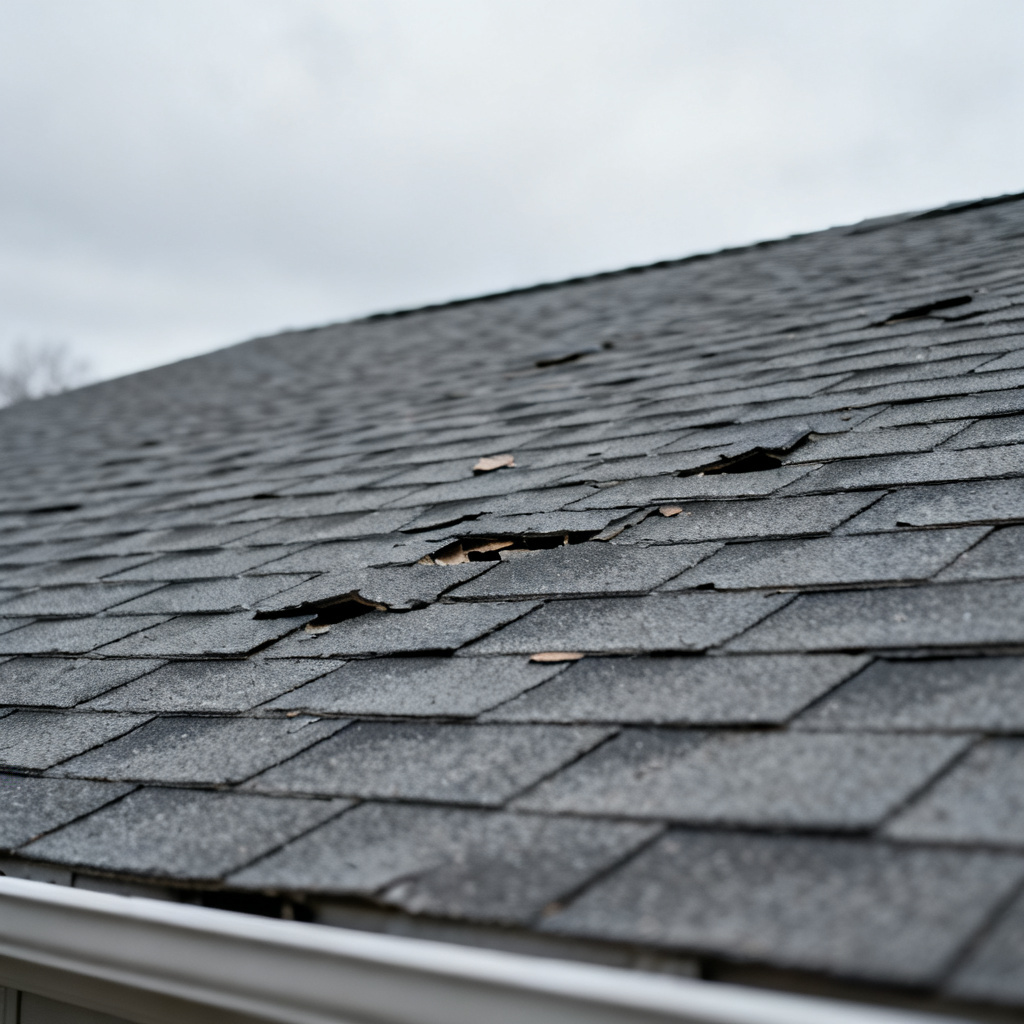
- Broken or missing shingles, visible granule loss, and bruised surfaces are common hail indicators.
- Lifted seams, loose flashing, and missing fasteners often signal wind-related damage.
- Interior stains, attic moisture, and sagging sheathing point to active leaks needing prompt inspection.
How Does Hail and Wind Damage Affect Roofs in Kansas City?
Hail impact causes shingle bruising, granule displacement, and punctures that reduce waterproofing capacity; wind uplift tears edges and exposes underlayment, creating entry points for moisture. Visible signs include circular bruising patterns, concentrated granule loss, split shingle tabs, and displaced metal flashings. Early temporary measures such as tarping limit interior exposure while a full inspection determines whether repair or replacement is necessary. Proper documentation of these signs—photos, drone imagery, and a contractor report—supports insurance claims and informs the correct remediation path.
What Signs Indicate You Need Roof Repair or Replacement?
Indicators for replacement include widespread granule loss, multiple active leaks, pervasive shingle curling, and roofs exceeding expected life based on material type; localized damage, flashing failures, and isolated leaks usually point to repair. Interior signs such as attic daylight, sagging decking, or repeated leak patches suggest structural concerns that favor replacement. A professional inspection can quantify the extent of damage and provide a cost-benefit comparison that accounts for remaining lifespan and insurance coverage. Promptly addressing early signs reduces the risk of interior damage and higher downstream costs.
How Does Blue Ribbon Roofing Provide Emergency Roofing Services in KC?
Emergency services focus on rapid assessment, temporary water-tight protections, and a fast documentation package to support claims and immediate safety. Service steps include same-day or next-day preliminary inspections following storms, temporary tarping to prevent further interior damage, and prioritized scheduling for full repairs once approvals or materials are secured. Coordination with insurers and clear photographic records are part of the emergency response to expedite decisions and restoration. These emergency measures help stabilize properties and create a clear path toward comprehensive repairs.
How Can You Schedule a Roofing Service or Get a Free Inspection in Kansas City?
Scheduling a roofing service typically involves requesting an inspection, confirming scope and availability, and receiving a documented estimate with photo-backed findings. Many contractors offer free initial inspections to evaluate storm damage or general wear; when in doubt, request a documented inspection that includes photographs and a prioritized action plan. Prepare to provide property location, a brief description of visible issues, and recent storm dates to help prioritize the visit. Below is a short guide for booking and what to expect during an inspection.
- Provide location and description of observed damage when requesting an inspection.
- Schedule a drone-enabled or on-roof visual inspection during daylight hours for best photographic results.
- Receive a written report with photos, recommended actions, and a transparent estimate for repairs or replacement.
What Is the Process for Booking a Roof Inspection with Blue Ribbon Roofing?
Booking an inspection generally requires providing the property address, describing visible concerns, and selecting an inspection window; inspectors arrive with measurement tools and drone equipment to capture the roof condition comprehensively. The inspector will document visible damage, evaluate flashing and drainage, and note any decking or structural issues, producing a photo-rich report and a recommended scope. Report delivery timelines vary but typically occur within a few days of inspection and include prioritized repairs and cost estimates. Preparing photos taken from the ground and noting leak locations accelerates the inspection process and improves report accuracy.
Are Free Estimates Available for Kansas City Roofing Services?
Many roofers provide free initial inspections and estimates that identify visible storm damage and recommend next steps; a free estimate usually covers a basic visual assessment and an itemized repair plan. For in-depth forensic reports or engineered decking assessments, contractors may offer a paid comprehensive roof report; these detailed reports include measurements, material testing, and structural recommendations. Understand the distinction: free estimates help scope visible damage and prepare claims, while paid reports provide deeper analysis for complex or disputed claims. Choose the level of assessment that matches the property’s condition and insurance requirements.
How Can Customers Contact Blue Ribbon Roofing for Local Service Areas?
Customers are encouraged to request inspections and describe observed issues—such as missing shingles, leaks, or storm impacts—so responders can prioritize urgent needs and prepare appropriate equipment for the visit. When contacting any local roofing provider, include property location, preferred contact windows, and recent storm dates to help schedule a prompt inspection. For emergency situations, request immediate mitigation to prevent interior damage and document all temporary protections taken. Timely communication and clear photographic documentation from the homeowner accelerate evaluation and repair scheduling.
- Provide address, visible damage description, and preferred contact times for scheduling.
- Include recent storm dates and any immediate interior impacts when requesting emergency assistance.
- Keep photographic records and receipts for temporary mitigation to support claim submissions.
This final set of steps completes the homeowner’s path from recognition of damage to inspection, documentation, and scheduling for repair or replacement.