By the time a leak becomes visible inside a building, water may have already reached insulation, decking, ceiling materials, or other parts of the building.
That is why commercial roof inspections in Kansas City should be part of routine property maintenance.
For property managers responsible for an office, warehouse, apartment complex, retail center, public building, or several properties, regular inspections can also provide something just as valuable as finding damage: information.
Knowing the condition of each roof makes it easier to decide what needs attention now, what can wait, and what may need to be included in a future capital budget.
How Often Should a Commercial Roof Be Inspected?
Most commercial properties benefit from having the roof professionally inspected on a regular schedule, with additional inspections after severe weather or when there are signs of a problem.
The right schedule depends on the roof’s age, roofing system, repair history, drainage, rooftop equipment, and overall condition.
An older TPO roof with a history of leaks may need more attention than a newer roof with no known problems.
The important part is consistency.
If nobody looks at the roof until a tenant reports water coming through a ceiling, maintenance becomes reactive. That can mean emergency calls, interior repairs, disruption to tenants, and unexpected expenses.
Regular inspections give property managers a chance to find problems while there are still options.
What Should Be Checked During a Commercial Roof Inspection?
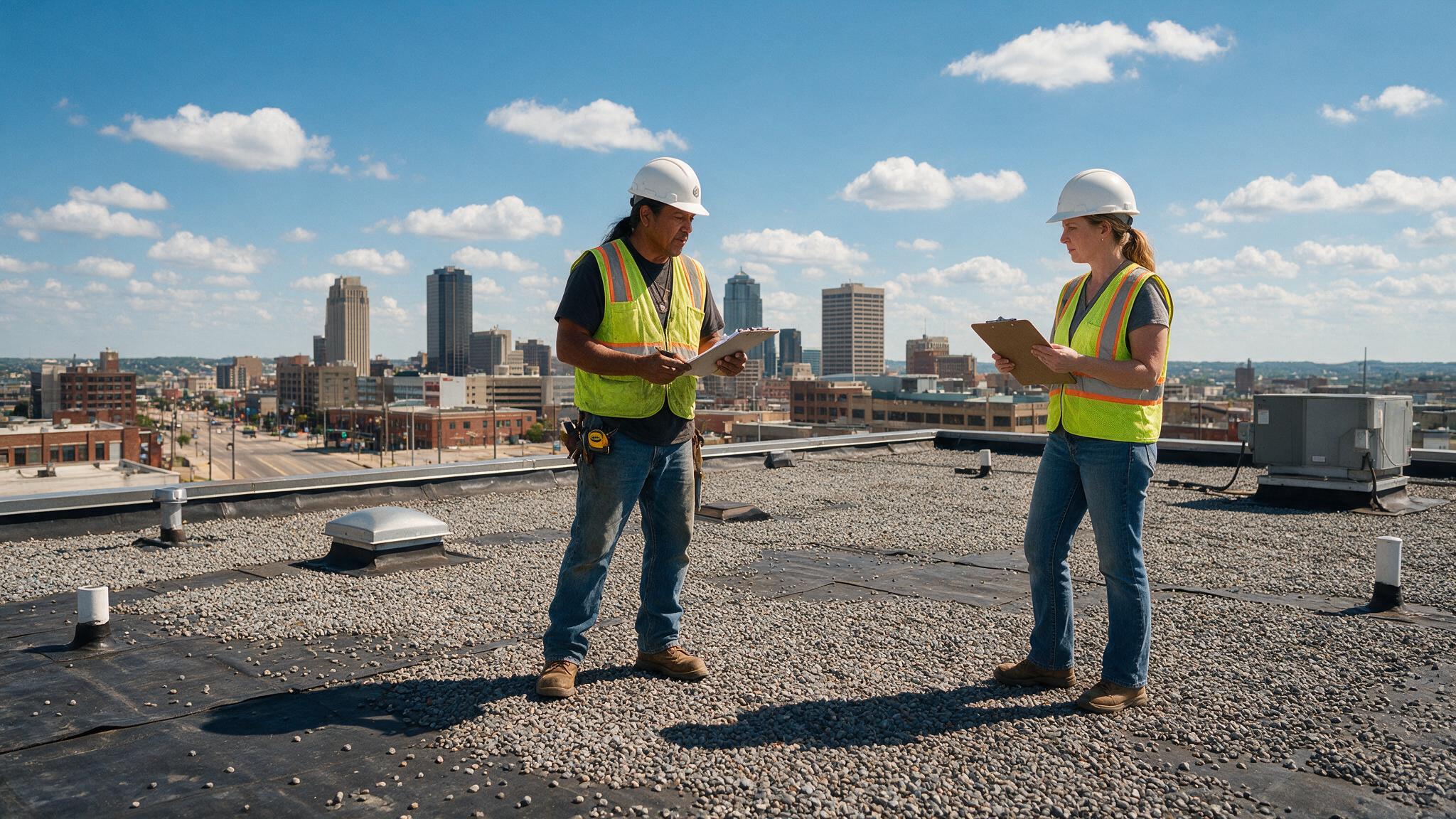
A good commercial roof inspection looks beyond the roofing membrane itself.
On a flat or low-slope roof, water has many possible entry points. Seams, flashing, penetrations, drains, curbs, edges, and previous repairs all deserve attention.
An inspection should typically evaluate areas such as:
- Roofing membrane condition
- Seams and attachment points
- Flashing
- Roof edges
- Drains, gutters, and other drainage areas
- Ponding water
- HVAC and equipment penetrations
- Previous repairs
- Signs of moisture or deterioration
- Visible punctures, cracks, openings, or damaged material
The goal is not to find an excuse to replace the roof. The goal is to understand what condition the roof is actually in.
Blue Ribbon’s approach starts with a detailed inspection and identifying what is salvageable before recommending unnecessary replacement work. That approach is part of the company’s broader focus on clear communication and honest recommendations.
Why Are Inspections Especially Important After Kansas City Storms?
Kansas City commercial roofs can experience hail, strong wind, heavy rain, snow and ice, summer heat, and large temperature swings.
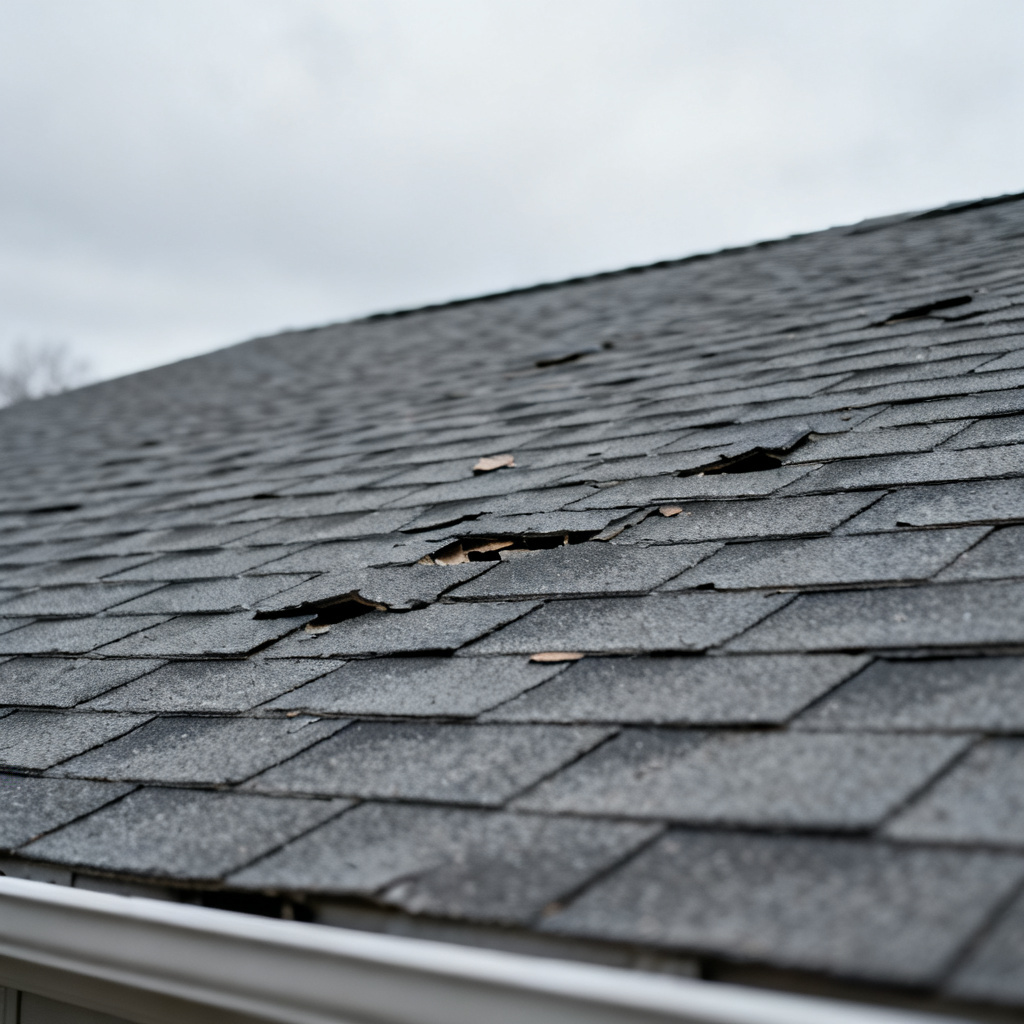
Some storm damage is obvious. Other damage is not.
A property manager may walk around the building after a storm and see nothing unusual from the ground. That does not necessarily tell you what happened around a rooftop unit, membrane seam, drain, flashing detail, or another vulnerable area.
This is where building owners can get caught off guard.
A small opening may not cause an obvious leak during the first rain. Moisture can sometimes travel through the roofing assembly before appearing somewhere inside the building.
After significant weather, documenting the roof’s condition also creates a record of what was found and what action was taken.
For someone managing multiple properties, that documentation can be especially useful.
Does a Commercial Roof Leak Mean the Roof Needs to Be Replaced?
No. A commercial roof leak does not automatically mean the entire roof needs replacement.
The right decision depends on where the water is entering, how widespread the damage is, the condition and age of the existing system, and whether moisture has affected materials below the roof surface.
Sometimes a focused commercial roof repair is the right answer.
Other times, repeated leaks across an aging system can make continued repairs less practical.
A property manager should be able to understand the difference before committing capital to a major project.
A Simple Repair-or-Replace Decision Framework
Repair may make more sense when:
The roof is generally in good condition, the problem is isolated, and the damaged area can be properly repaired without ignoring larger issues.
More extensive work may make sense when:
Leaks are becoming frequent, moisture is widespread, the roofing system is deteriorating in multiple areas, or repair costs keep adding up without solving the underlying problem.
Replacement planning may make sense when:
The existing system is approaching the end of its useful service life and continued repairs are becoming less predictable or economical.
The answer should come from the roof’s actual condition, not from assuming every leak requires a new roof.
How Do Commercial Roof Inspections Help With Maintenance Budgets?
Roof inspections help turn an unpredictable expense into something property managers can plan around.
Instead of discovering a major problem when it becomes an emergency, an inspection can help separate roofing needs into categories.
For example:
Immediate: An active leak or opening that could damage the building.
Short-term: A deteriorating detail that should be repaired before it develops into a larger problem.
Monitor: An area that is still performing but should be checked during future inspections.
Capital planning: A roof that is aging and may require a larger project in the coming years.
That information becomes even more useful across a portfolio.
If you manage six buildings, for example, you may discover that one needs immediate repair, three are performing well, one needs drainage improvements, and another should be considered for replacement in a future budget cycle.
That is much easier to manage than treating every roof problem as an emergency.
What Should Property Managers Document?
Keep a basic roof history for every property you manage.
You do not need an overly complicated system. What matters is having enough information to see patterns over time.
Keep records of:
- Roof system and approximate age
- Inspection dates
- Photos
- Leak locations
- Repairs completed
- Storm-related inspections
- Drainage problems
- Areas being monitored
- Previous contractor recommendations
- Major rooftop equipment work
This is especially important when different maintenance staff, property managers, vendors, or contractors may work on the building over its lifespan.
The more history you have, the easier it becomes to make a good roofing decision.
Project Example: Tracking Down a Commercial Leak in Butler
Blue Ribbon has seen firsthand why diagnosing the source of a leak matters.
After completing roofing work on a courthouse in Butler, Missouri, the company was contacted when water later appeared inside the building. Blue Ribbon returned to investigate the issue.
The inspection found that the new water intrusion was coming from another part of the building rather than the roofing work Blue Ribbon had completed. The team showed the customer where the problem was coming from and helped assess what needed to happen next.
The lesson for property managers is important: water inside a building does not always tell you where the exterior problem is located.
Before authorizing a large repair, find the source.
What Should Property Managers Do Next?
If you are responsible for a commercial property in Raytown, Kansas City, Jackson County, or the surrounding metro, start by getting a clear picture of the roof you already have.
- Review the roof’s history. Find its approximate age, system type, past repairs, and known leak areas.
- Document current problems. Keep records of leaks, ceiling stains, drainage concerns, and recent storm events.
- Identify your priority properties. If you manage several buildings, start with older roofs and buildings with recurring problems.
- Schedule a professional roof assessment. Do not send untrained employees onto a roof. Commercial roofs can have fall hazards, slippery surfaces, electrical equipment, skylights, and other risks.
- Build a longer-term plan. Use inspection findings to separate immediate repairs from future maintenance and capital projects.
Talk With Blue Ribbon About Your Commercial Roof
Blue Ribbon Roofing works with commercial properties throughout the Kansas City area, including larger buildings and public-sector projects. The company has experience with commercial roofing systems and understands the importance of showing up, finding the actual problem, and explaining what needs to happen next.
If you manage one building or an entire portfolio, Blue Ribbon can help assess the condition of your roofs and identify which issues deserve attention now and which can be planned for later.
The goal is not to sell you the biggest roofing project possible. It is to help you make the right decision for the building.
Frequently Asked Questions
How often should a TPO roof be inspected?
A TPO roof should be checked regularly and after significant weather or when leaks or other problems appear. The appropriate inspection schedule depends on the roof’s age, condition, drainage, repair history, and building use.
Should I have a commercial roof inspected after hail?
Yes, an inspection can be worthwhile after significant hail because some damage may not be obvious from the ground. A professional can evaluate the membrane, seams, flashing, drainage areas, and rooftop details for signs of damage.
Can ponding water damage a flat commercial roof?
Standing water can be a sign that drainage or roof slope needs attention. Persistent ponding should be evaluated because it can put added stress on the roofing system and may point to drainage problems.
Should property managers keep commercial roof inspection records?
Yes. Inspection reports, photos, repair records, and leak histories make it easier to track changes in roof condition and plan maintenance or future capital projects.
Can Blue Ribbon inspect multiple commercial properties?
For property managers overseeing several buildings, discussing the portfolio as a whole can help identify priority roofs and organize maintenance planning. Blue Ribbon serves commercial customers from its Raytown base and targets commercial properties, general contractors, schools, apartments, and other larger projects throughout the Kansas City area.