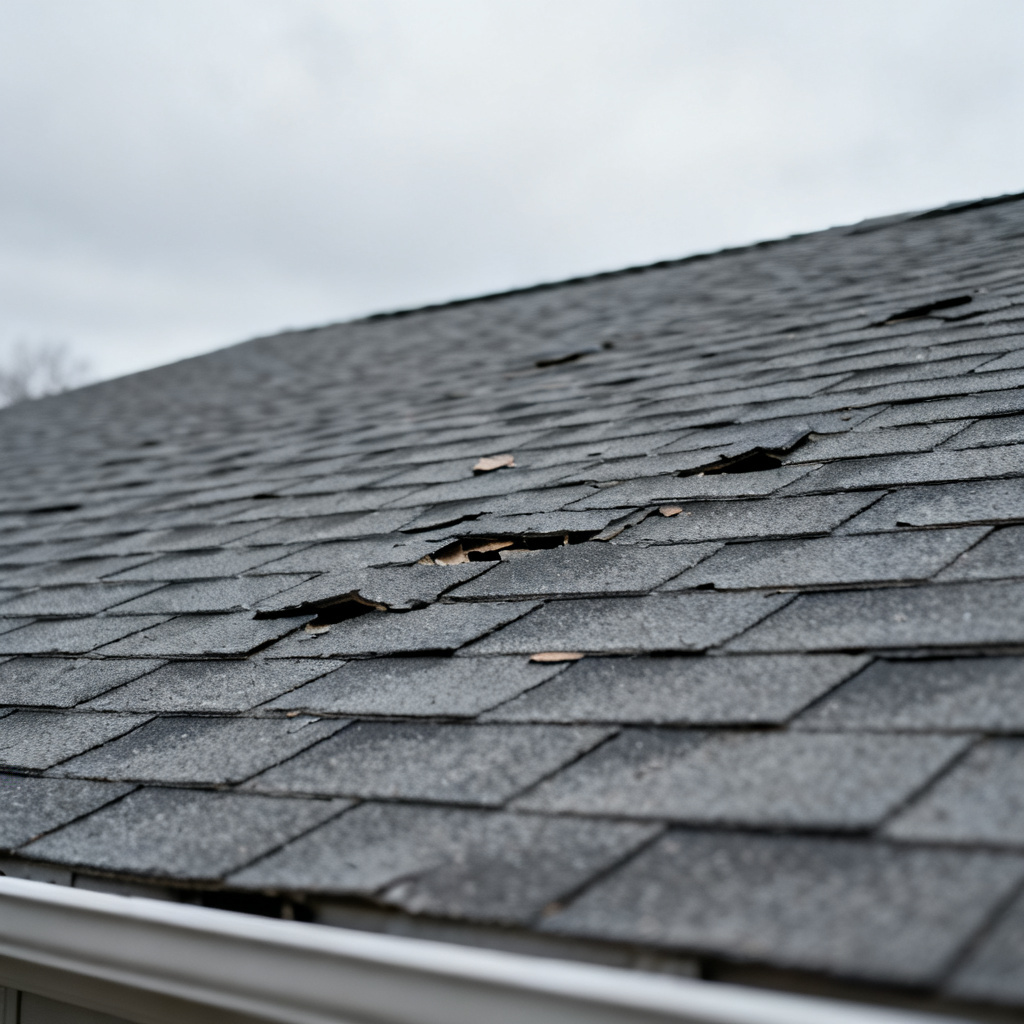
If you’re in Kansas City right now watching the sky turn dark, you’re probably thinking the same thing most homeowners are:
“Hopefully it just passes.”
But here’s what we see every time a storm like this rolls through Lee’s Summit, Blue Springs, Independence, and across the metro:
The damage doesn’t always show up right away.
And by the time it does, it’s already become a bigger problem.
What Today’s Kansas City Storm Could Actually Do to Your Roof
Storm systems like the one moving through this afternoon typically bring a mix of:
- Heavy rain
- Strong wind gusts
- Potential hail pockets depending on the storm cell
It’s not always the size of the storm that matters.
It’s the combination.
Here’s what that combination does:
- Wind lifts shingles just enough to break their seal
- Rain pushes water underneath where it shouldn’t be
- Hail (even small) weakens protective layers
- Gutters get overwhelmed or clogged instantly
This is where homeowners get caught off guard.
Because nothing looks “major” at first.
Why Most Roof Damage Goes Unnoticed During the Storm
Here’s what most people don’t realize:
Storm damage is rarely obvious while it’s happening.
You’re inside.
It’s loud.
You’re focused on the weather, not your roof.
But outside, small things are happening that matter:
- Shingles loosening
- Flashing shifting
- Water finding entry points
And the biggest issue?
👉 You won’t see the effects until later.
Sometimes days. Sometimes weeks.
What You Should Do DURING the Storm (Not After)

This part matters more than people think.
Right now, while the storm is hitting Kansas City:
- Stay off the roof completely
- Watch for active leaks inside (ceilings, walls)
- Move valuables away from vulnerable areas
- Take note of loud impacts (possible hail)
- Check for water around windows or vents
You’re not trying to fix anything.
You’re just paying attention.
What to Check Immediately After the Storm Passes
Once things calm down, this is where homeowners either protect themselves or miss something important.
Quick Post-Storm Inspection Checklist
Walk your property and look for:
- Shingle pieces or debris in the yard
- Dents in gutters or downspouts
- Siding damage or marks
- Overflowing or detached gutters
- Water spots forming inside
If you see multiple signs, your roof likely took damage.
And here’s the key:
👉 You don’t need visible roof damage to have a real problem.
The Costly Mistake We See Across Kansas City Every Year
We see this all the time after storms like today.
A homeowner waits.
They think:
“It’s probably fine.”
Then a few weeks later:
- A small leak shows up
- It spreads into insulation or drywall
- Insurance becomes harder to navigate
- Now it’s a bigger repair than it needed to be
Most homeowners don’t wait because they don’t care.
They wait because they don’t know what to look for.
How to Handle Insurance Without Getting Burned
Storm claims can be confusing, especially if you’ve never dealt with one before.
And to be honest, this is where a lot of people have had bad experiences.
Not every contractor handles this the right way.
Here’s how it should work:
- Inspection first
Not every roof needs a claim filed - Clear documentation
Photos, explanation, no guesswork - Honest recommendation
Repair vs replacement based on facts - Guidance through the process
Not pressure to “just file it”
A good contractor helps you make the right decision, not the most expensive one.
That’s a big difference.
What a Real Storm Damage Inspection Looks Like
This is not someone glancing at your roof from the ground.
A proper inspection after a Kansas City storm includes:
- Full surface check for wind and hail impact
- Testing shingles for hidden damage
- Inspecting flashing, valleys and penetrations
- Checking gutters and drainage systems
- Documenting everything so you understand it
It’s detailed for a reason.
Because small issues turn into big ones when they’re missed.
Why Choosing the Right Contractor Matters More After a Storm
Storms bring out a lot of contractors.
Some local. Some just passing through.
This is where homeowners have to be careful.
You want someone who:
- Explains things clearly
- Doesn’t push a full replacement right away
- Shows you exactly what’s going on
- Stands behind their work even if it costs them
That last part matters.
Because not every company operates that way.
Final Thoughts: Don’t Guess After a Storm Like This
If today’s storm hits your area, the safest move isn’t to panic.
It’s to get clarity.
Most roof problems don’t start as major issues.
They start small, get missed, and turn into something bigger.
A quick inspection now can save you from:
- Bigger repairs
- Insurance headaches
- Long-term damage
And at the end of the day, that’s what matters.
Protecting your home the right way, without overcomplicating it.