Commercial roof repair vs replacement – do you know which one you need?
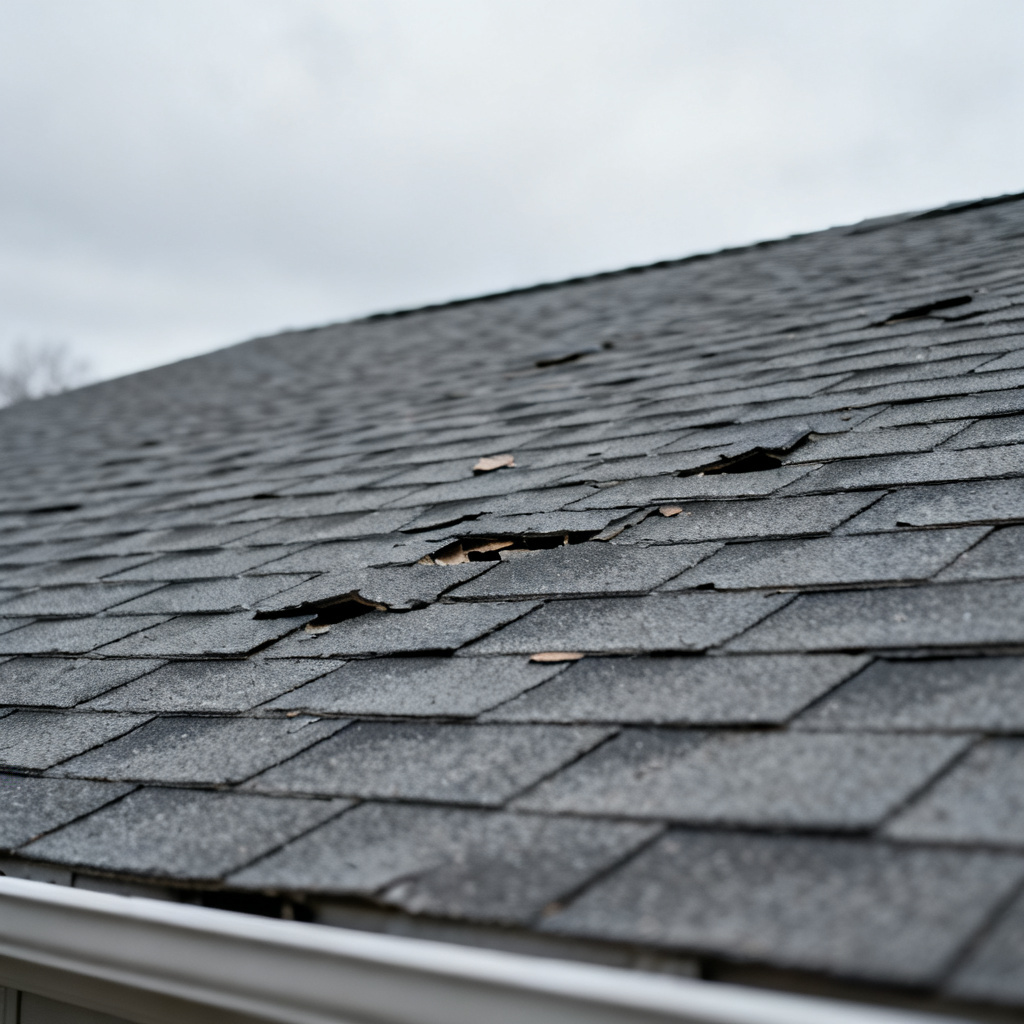
When comparing commercial roof repair vs. replacement, the first step should be understanding why the roof is failing and how much of the roofing system is actually affected.
Sometimes repairing the roof is the smarter decision. Sometimes continuing to repair it is just delaying a replacement the building already needs.
A good inspection should help you tell the difference.
When Does Commercial Roof Repair Make More Sense?
Commercial roof repair usually makes sense when the problem is limited and the rest of the roofing system is still performing properly.
Think about a TPO roof that has one damaged area around a penetration or flashing detail.
If the surrounding membrane is performing well, the insulation is in acceptable condition, and the roof does not have a history of widespread leaks, replacing the entire system may not make financial sense.
This is an important distinction for property managers.
The goal should not be to spend the least amount of money today. It should be to avoid spending money where it is not necessary while still protecting the building.
Blue Ribbon’s approach is to inspect the roofing system, explain what is found, and identify what can be kept before recommending unnecessary replacement work.
Repair may be appropriate when:
- Damage is concentrated in one area
- The roof is otherwise performing well
- Leaks have not become widespread
- The problem can be clearly identified
- Previous repairs are still performing
- The existing roofing system has useful service life remaining
The condition of the entire roof matters more than the existence of one problem.
When Should a Property Manager Consider Roof Replacement?
Replacement becomes a stronger option when problems are no longer isolated.
One repair is maintenance.
Repeated repairs across different sections of an aging roof can indicate a larger problem.
If your maintenance records show leaks in several areas, repeated service calls, failing seams or flashing, drainage concerns, or repairs that keep requiring additional repairs, it may be time to evaluate the roof as a complete system.
This does not mean you should automatically approve replacement.
It means the conversation should change from:
“How do we stop this leak?”
to:
“What is the most sensible plan for this roof over the next several years?”
That is a much better question for a property manager.
How Does Roof Age Affect the Repair-or-Replace Decision?
Roof age is important, but it should not make the decision by itself.
Two commercial roofs installed around the same time can be in very different condition.
One may have received regular maintenance, good drainage, limited foot traffic, and timely repairs.
Another may have recurring ponding water, numerous penetrations, repeated repairs, and years of deferred maintenance.
Those roofs should not receive the same recommendation simply because they are the same age.
An inspection should consider the actual condition of the roofing system, including areas such as:
- Membrane condition
- Seams
- Flashing
- Roof edges
- Penetrations
- Drainage
- Ponding areas
- Previous repairs
- Signs of moisture
- Conditions around rooftop equipment
The roof’s history matters too.
If your records show that you have called a contractor six times for different leaks over a relatively short period, that tells a different story than a roof experiencing its first isolated problem.
When Do Repeated Roof Repairs Become Too Expensive?
There is no single dollar amount that makes replacement the right answer for every building.
Instead, property managers should look for a pattern.
Suppose you approve another repair because it is cheaper than replacement.
Six months later, another leak develops.
Then another.
Eventually, you may be spending a meaningful part of your maintenance budget without improving the long-term reliability of the roof.
This is where looking only at today’s estimate can become misleading.
Ask four questions:
1. Are we fixing the same problem repeatedly?
If the same area keeps failing, determine why.
2. Are new problems appearing in different areas?
Multiple unrelated failures may point to broader deterioration.
3. Are repair costs becoming more frequent?
Review the last several years of invoices instead of looking only at the current estimate.
4. How long do we reasonably expect the repair to help?
A repair that gives a healthy roof more useful life can be valuable. Continually repairing a failing system may not provide the same return.
For a property manager, the cheapest invoice is not always the lowest-cost decision.
What Other Costs Should Be Considered Besides the Roof?
The cost of a commercial roof problem is not limited to roofing work.
A leak can affect building operations.
Depending on the property, that could mean damage to ceilings, tenant spaces, inventory, insulation, equipment, or interior finishes.
There can also be operational costs when maintenance staff repeatedly respond to the same problem.
For an occupied office, apartment property, school, retail building, warehouse, or public facility, disruption matters too.
That is why repair-versus-replacement decisions should consider both the roofing budget and the consequences of another failure.
A Simple Commercial Roof Repair vs. Replacement Framework
Property managers do not need to become roofing experts to ask better questions.
Use this framework when evaluating your options.
Consider Repair When:
The problem is isolated, the surrounding roof is performing properly, and the repair addresses a clearly identified cause.
Consider Continued Maintenance When:
The roof has minor issues that can be addressed systematically and inspections show that the overall system remains serviceable.
Start Planning for Replacement When:
Repairs are becoming more frequent, problems are appearing across multiple areas, or the roof’s condition makes future performance less predictable.
Consider Replacement When:
The roofing system has widespread deterioration or moisture problems and continued repair spending no longer provides a practical long-term solution.
Most importantly, ask the contractor to explain why the recommendation makes sense.
You should be able to understand what they found without needing to understand every technical roofing term.
How Should Property Managers Handle Multiple Roofs?
Repair-versus-replacement decisions become even more important when you manage a portfolio.
You may have one building in Raytown with an active leak, another in Independence with an aging TPO system, and a third in Blue Springs that is still performing well.
Replacing all three roofs because they are similar in age would not necessarily be a smart use of capital.
Ignoring all three until they leak would not be smart either.
Instead, rank them.
Priority 1: Immediate action
Active leaks, significant damage, or conditions threatening building operations.
Priority 2: Repair and monitor
Problems that can be corrected but should continue to be inspected.
Priority 3: Capital planning
Aging roofs that are currently functioning but are likely to require larger investments in the future.
Priority 4: Routine maintenance
Healthy roofing systems that should remain on an inspection and preventive maintenance schedule.
Now your roofing information becomes part of your property-management plan rather than a series of emergency invoices.
Project Example: Choosing Repair Over Unnecessary Replacement in Independence
We recently worked with Truman Business Park in Independence, Missouri, after a property manager discovered water staining inside one of the building’s tenant spaces following heavy rain.
Because the commercial roof was older, the initial concern was that a full replacement might be necessary.
During the inspection, Blue Ribbon found that the larger roofing system was still performing, while the water intrusion appeared concentrated around a specific roof detail.
Rather than treating the age of the roof as the only deciding factor, the recommendation focused on repairing the affected area and documenting other sections that should be monitored.
That allowed the property manager to address the immediate problem while keeping a larger roof project in the property’s future capital plan instead of treating it as an emergency expense.
The lesson is simple: repair the problem you have today while planning responsibly for the roof you may need tomorrow.
This is an illustrative project example based on common commercial roofing conditions in the Kansas City area.
What Should Property Managers Do Next?
If you are deciding whether to repair or replace a commercial roof, start with information rather than estimates.
- Collect your repair history. Review leaks, invoices, inspection reports, photos, and previous recommendations.
- Identify patterns. Determine whether you have one recurring problem or failures developing across different areas.
- Have the complete roof inspected. Do not make a major capital decision based only on the area where water appeared inside.
- Ask for options. Find out what can be repaired, what should be monitored, and what may need replacement.
- Connect roofing decisions to your capital plan. If replacement is approaching, planning ahead can be much easier than dealing with it after a major failure.
Never send untrained employees onto a commercial roof to conduct an inspection. Roof edges, skylights, wet surfaces, rooftop equipment, and other conditions can create serious hazards.
Get the Right Recommendation for the Building
Blue Ribbon Roofing works with commercial properties, general contractors, apartments, schools, public facilities, and other larger projects throughout the Kansas City area. Commercial roofing, including TPO systems, is an important part of the company’s work.
Blue Ribbon was built around the idea that roofing recommendations should be honest and clearly explained. The company emphasizes long-term relationships rather than simply maximizing an individual job.
If you are trying to decide between commercial roof repair and replacement, start with an inspection.
Understand what is failing.
Understand what is still working.
Then decide where your roofing budget makes the most sense.
Frequently Asked Questions
Is it worth repairing an older commercial roof?
It can be. Age alone does not determine whether a roof should be replaced. If the problem is isolated and the remaining roofing system is performing properly, repair may still make sense.
Does one commercial roof leak mean I need replacement?
No. A leak should be investigated to determine where water is entering and how much of the roofing system is affected before replacement is recommended.
Can a TPO commercial roof be repaired?
Many localized problems with commercial roofing systems can potentially be repaired, depending on the condition and extent of damage. The roof should be inspected before deciding between a targeted repair and larger project.
How can property managers budget for commercial roof replacement?
Start tracking roof age, condition, repair frequency, leak history, inspection results, and problem areas. That information helps identify which properties may require future capital spending before replacement becomes an emergency.
Should I get a commercial roof inspection before budgeting for replacement?
Yes. An inspection can help determine whether the roof needs immediate replacement, targeted repairs, continued maintenance, or future replacement planning. That gives property managers better information for setting priorities and budgets.